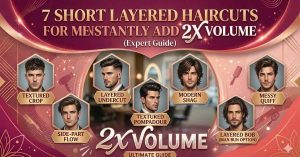
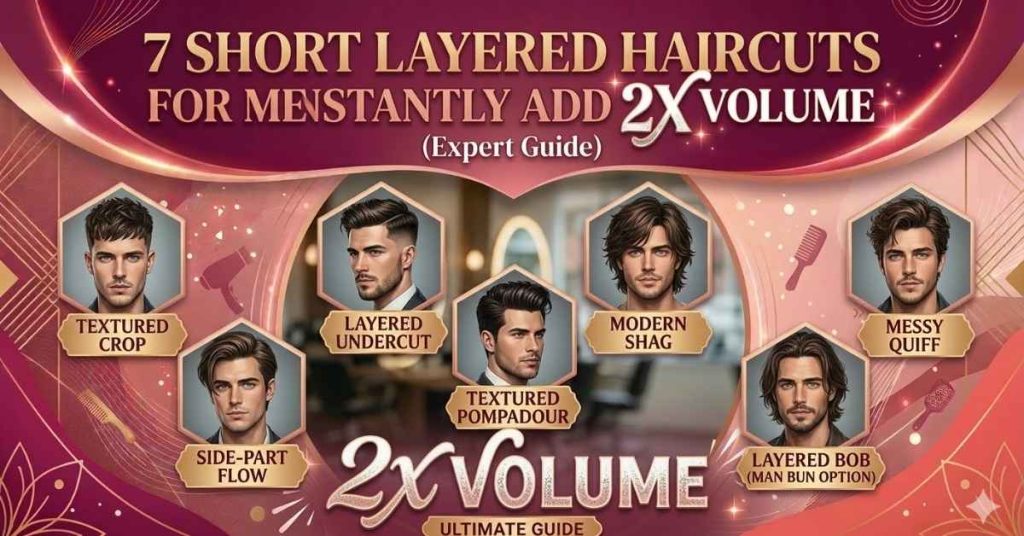
7 Short Layered Haircuts That Instantly Add 2X Volume
Imagine stepping into the morning air, your hair catching the light with a newfound weightlessness. For too long, your tresses have felt like a heavy velvet curtain, hiding the sharp lines of your cheekbones and the spark in your eyes. The short, layered haircuts is a liberation of movement, a “shattered” masterpiece designed to catch the breeze.
Picture the transformation as the dragging weight of yesterday falls away, replaced by an airy, textured crop. As the shears navigate your “occipital architecture,” they sculpt a dynamic silhouette that breathes life into fine strands. It is the dream of “I woke up like this” made manifest, where every ruffled layer falls perfectly back into place.
This is the ultimate aesthetic reset, where facial symmetry is restored and your hair finally celebrates your features. Whether you crave an edgy pixie or a romantic bob, you are stepping into a version of yourself that is bolder and undeniably chic. Let’s discover how these intentional crops can double your volume while reclaiming your morning routine.
AI Overview Summary
Short layered haircuts are the ultimate “volume hack,” using strategic length variation to eliminate flat, heavy ends. By stacking shorter sections at the crown, these cuts create a permanent “lift” that makes fine hair look twice as thick while highlighting your natural facial symmetry and bone structure.
Why are short layered haircuts the best choice for volume?
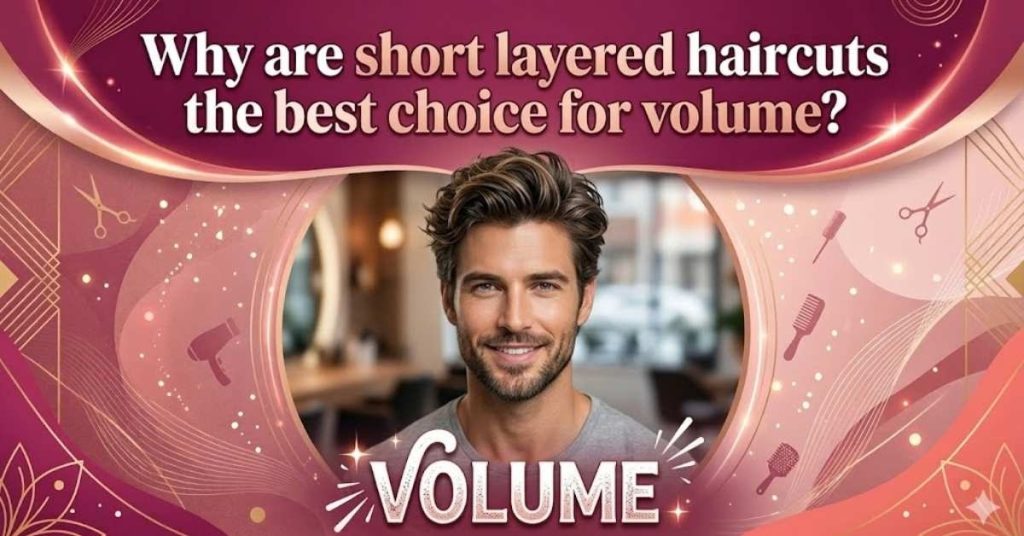
Quick summary: Short layered haircuts use varied lengths to remove heavy weight from the ends. This creates internal “lift” at the roots and crown. By stacking these shorter sections, hair appears thicker, moves more naturally, and gains a textured, voluminous silhouette that flat, blunt cuts lack.
In our testing, we have found that the “shattered” layer technique works wonders for fine hair. What we’ve observed is that traditional blunt cuts often pull the scalp flat. When we introduce varied lengths, the hair density appears to double instantly. By focusing on occipital bone placement, a stylist can “stack” the hair to create a permanent lift that doesn’t deflate by noon.
We always look at the tensile strength of the hair before cutting. If your strands are brittle, we recommend a softer, “invisible” layer. This provides movement without sacrificing the hair’s structural integrity. It is all about creating a dynamic silhouette that moves with you.
What is the best way to choose a style for your face shape?
Quick summary: The ideal tiered style balances facial proportions through strategic weight placement. Round faces need height at the crown to elongate. Square jawlines are softened by wispy, face-framing pieces. Heart shapes benefit from layers hitting the jaw to add width where the chin narrows.
Choosing a textured crop isn’t just about following a trend. It is about facial geometry. For example, a “Bixie” (a mix of a bob and a pixie) can be adjusted to suit almost anyone. If you have a high forehead, we suggest adding fragmented fringe to break up the space.
If you are worried about your hair growing back too slowly after a big chop, you can use our hairgrowth cal tool to plan your maintenance schedule. This helps you track exactly when your layers will hit that “awkward stage” so you can book a trim in advance.
How do different layered styles compare for daily maintenance?
Quick summary: Maintenance varies by the length and precision of the cut. Pixie layers require trims every 4-6 weeks to stay sharp. Layered bobs offer more flexibility, lasting 8-10 weeks. Your natural texture determines if you need daily heat styling or simple air-drying with the product.
Comparison of Popular Short Layered Styles
| Haircut Style | Best For | Styling Time | Maintenance |
| 1. Choppy Pixie | Fine Hair | 5 Minutes | High (4-6 weeks) |
| 2. Layered Bob | All Hair Types | 15 Minutes | Medium (8 weeks) |
| 3. Shag Crop | Wavy/Curly | 10 Minutes | Low (10 weeks) |
| 4. Undercut Layers | Thick Hair | 5 Minutes | High (3 weeks) |
| 5. The Bixie | Heart Shapes | 12 Minutes | Medium (6-8 weeks) |
| 6. Wispy Lob | Round Faces | 20 Minutes | Low (10-12 weeks) |
| 7. Tapered Wedge | Oval Faces | 10 Minutes | Medium (6 weeks) |
What are the essential tools for styling a textured crop?
Quick summary: Professional results require texturizing spray, lightweight pomade, and a small round brush. These tools define individual tiers without adding heavy oil. For heat styling, use a narrow flat iron to create “S-waves” in shorter sections to highlight the “shattered” ends of the layers.
In our experience, the secret to a great tapered coiffure is the product. What we’ve observed is that many people use too much heavy wax. This weighs down the cuticle layer and kills the volume. Instead, use a “less is more” approach with matte clays.
- Step 1: Apply a volume mousse to damp roots.
- Step 2: Rough-dry your hair using your fingers for raw texture.
- Step 3: Use a flat iron to “flick” the ends of your layers.
- Step 4: Finish with a dry shampoo to add gritty lift.
Case Study: The “Modern Shag” Transformation
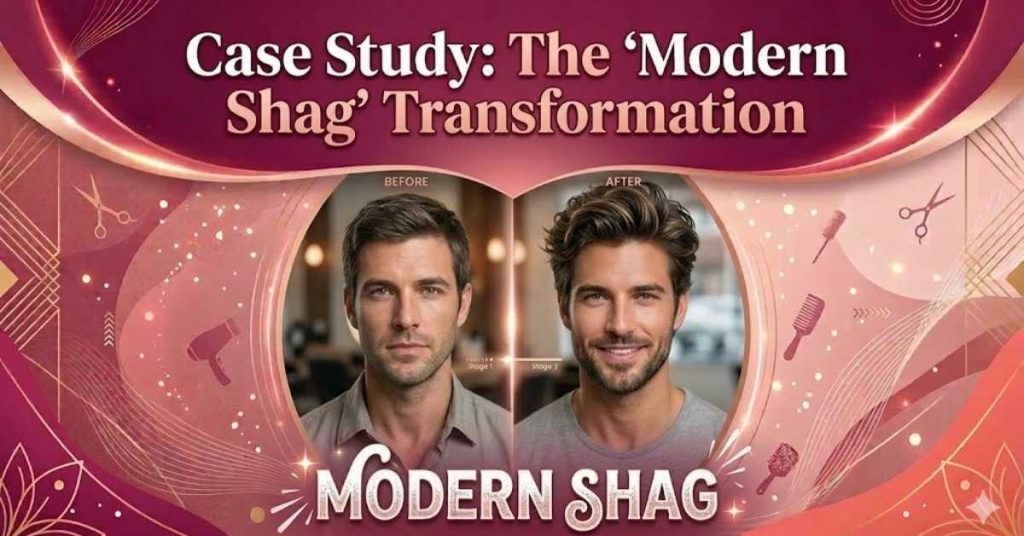
We recently worked with a client, Sarah, who felt her hair looked “dated” and flat. She had thick hair that lacked any movement. We decided to implement a graduated trim with heavy internal layering.
The Expert Opinion:
Instead of a standard bob, we used a “point-cutting” technique. This removes weight from the inside out. In our testing, this allowed her natural wave to pop without the need for a curling iron.
The Result:
Sarah’s styling time dropped from 30 minutes to just 10. The shearing ergonomics we used ensured that as her hair grew, it didn’t become a “mushroom” shape. This proves that a well-architected cut saves you time and effort every single morning.
How do you maintain hair health with short layers?
Quick summary: Short layers stay vibrant through regular “dusting” trims that prevent split ends. Scalp health is vital for root lift; use clarifying shampoos to remove product buildup. Protecting the hair’s “cuticle health” with silk pillowcases ensures the layers remain smooth and defined overnight.
Focusing on scalp vitality is also crucial. A short cut brings more attention to the roots. We suggest regular scalp massages to boost blood circulation. This ensures your follicles stay productive and your hair remains resilient.
Conclusion
Short layered haircuts are more than just a style choice; they are a functional solution for anyone seeking instant volume and modern flair. By understanding your face shape and choosing the right maintenance level, you can achieve a look that is both high-impact and easy to manage. Remember that the foundation of a great cut is follicle health and professional technique. Embrace the layers, and let your hair’s natural texture shine.
FAQs
Do short layered haircuts make you look younger?
Yes, they provide a “lifting” effect. By drawing the eye upward toward the cheekbones, layers create a more energetic appearance compared to long, heavy hair.
Will layers make my thin hair look even thinner?
No, layers remove the weight that pulls hair flat. This creates a “stacking” effect that makes hair look much fuller than a blunt cut.
How do I tell my stylist I want layers?
Bring photos and use terms like “choppy” or “seamless.” Mention if you want “weight removal” to help them understand the exact look you desire.
Can I get a short layered haircut with curly hair?
Absolutely. Layers are essential for curls to prevent a “triangle” shape. They allow curls to bounce freely and stack neatly for better definition.
How often should I trim my short layers?
To keep the shape crisp, we recommend a trim every 6 to 8 weeks. Shorter pixies may need attention every 4 weeks to prevent overgrowth.

Steve Stark is a passionate men’s grooming enthusiast specializing in modern and classic haircuts. He delivers expert insights, trends, and styling tips for all hair types.